Specialty · expressive arts therapy
Expressive arts therapy
You need no artistic skill or talent whatsoever. None. That is the first thing to say, because it is the thing that stops most people from trying a form of therapy that could move something they have been talking about for years.
Telehealth only, by secure video or audio, for people physically located in California. Laurie, LMFT.

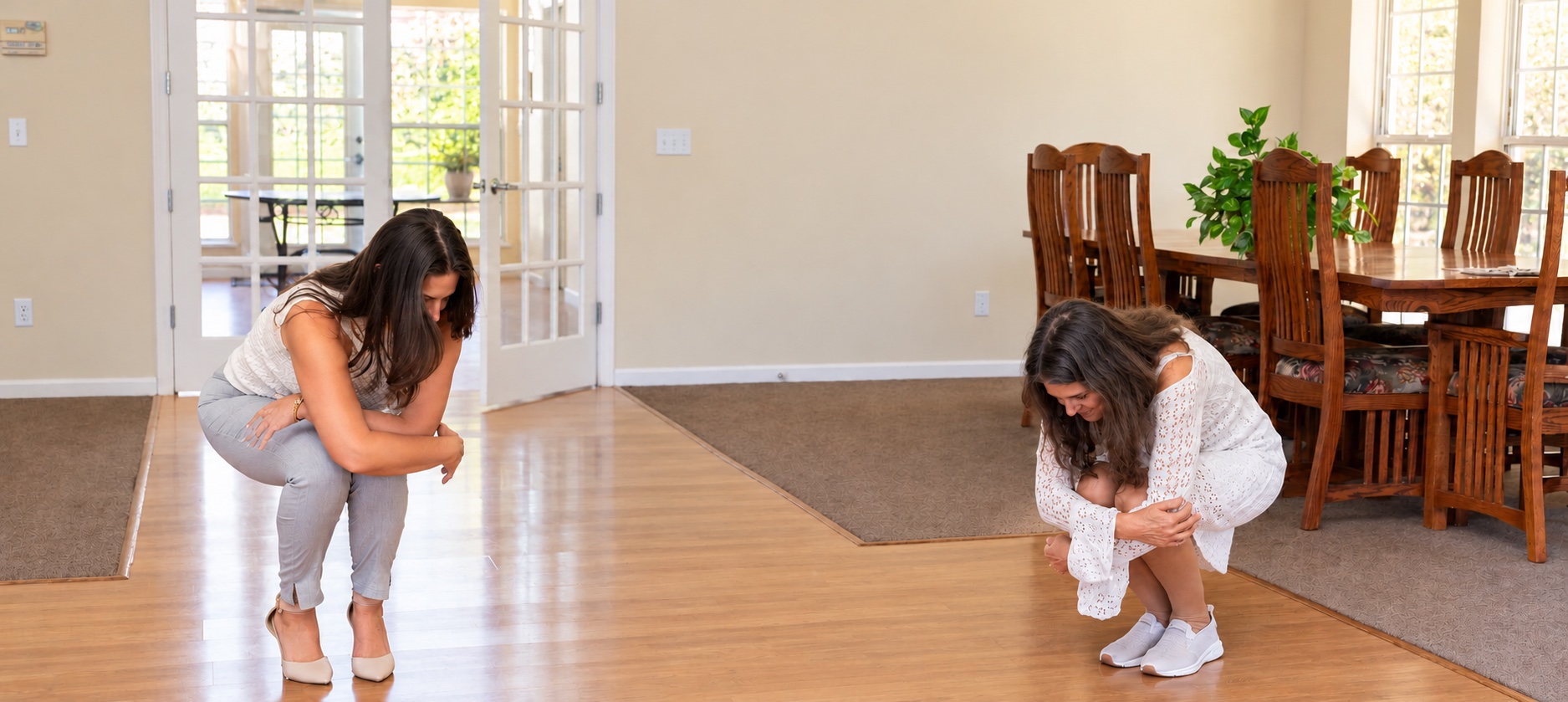
What this work looks like with me
Expressive arts therapy uses movement, vocals, writing, art and drama inside psychotherapy. It is an established modality with its own body of research and training, and my PhD is in expressive arts psychology, which is why I can use it lightly rather than ceremonially. Nothing you make is judged, kept or interpreted as a test of talent. We are not producing work. We are giving something in you a route out that does not have to pass through the part of your mind that has already explained the problem eleven times.
That is the actual mechanism. Insight lives in language, and language is where you are strongest, which is precisely the trouble. You have a well-built account of why you are like this. It is accurate and it has not changed anything. When you hum the note of a feeling, or let your posture show the shape of your week, or write for four minutes without stopping, the explanation gets bypassed and something arrives sideways, often something small and unmistakable, and often something you did not plan to say.
Each door opens a different room. Movement reaches what the body has been holding while you talked, grief in the shoulders, vigilance in the jaw, a want that shows up as leaning forward. Voice reaches volume and permission: how loud you are allowed to be, what happens in your throat when you say the true sentence. Writing outruns the editor if it is fast enough and unread. Visual work gives a feeling a size and a color when it will not take a name. Drama, which is simply speaking as, lets you say the thing to the person who is not in the room, or hear the part of yourself that has been arguing for years.
It suits certain people very particularly. People who have talked about a problem for years without shifting it. People who go blank when asked how they feel and are not being difficult, the words genuinely are not there. Highly sensitive people, whose systems take in far more than language carries. And grief that has no words yet, which is most fresh grief, because the loss is too large for a sentence and a sentence is all anyone keeps asking for.
It is offered as part of the work, not instead of it, and it is always optional. Most sessions look like careful conventional therapy. When the talking has stopped moving, I will offer five minutes of something else. You can decline it, every time, and the work will still go somewhere.
Expressive Arts Therapy: movement, vocals, writing, art, drama. My PhD is in expressive arts psychology.
Often used alongside grief work, patterns that will not shift and therapy for therapists.
The five doors
Movement
Not dance. Standing up and letting your body show what it has been carrying while you explained. Where grief and vigilance actually live.
Voice
Humming, tone, volume, the sound a feeling makes. How loud you are permitted to be, and what your throat does at the true sentence.
Writing
Four minutes, no stopping, nobody reads it. Fast enough to outrun the editor who has already tidied this story.
Art
Two colors and whatever paper is near. A size and a shape for something that will not take a name yet.
Drama
Speaking as. The sentence you never said, to the empty chair. The part of you that has been arguing, finally given a turn to talk.
Always optional
Offered when talking has stalled, never required, never performed for me, never judged. Decline it and we carry on.
How we would work
We start with a free 20-minute consult, and you can ask directly what this would involve for you. Sessions are 50 minutes by secure video anywhere in California. Bring nothing; if you want something at hand, paper and a pen is plenty.
In practice a session begins in conversation and stays there until it stops going anywhere. At that point I offer one small experiment, we do it for a few minutes, and then we talk about what shifted. Nothing is performed for me and nothing is analyzed as art. You keep whatever you make, or you throw it away in front of me, which is sometimes the useful part.
This sits inside the rest of my work rather than beside it: Internal Family Systems, somatic and mindfulness practice, Acceptance and Commitment Therapy, Cognitive Behavioral Therapy, and my own Positive Re-Narrative and Repatterning. I am EMDR certified and I am a certified hypnotherapist. My PhD is in expressive arts psychology.
I am a Licensed Marriage and Family Therapist. I do not treat bipolar disorder or schizophrenia, and I am not a crisis service. If you are in crisis, call or text 988, or call 911.
- Movement, vocals, writing, art and drama
- No artistic skill or talent required
- Offered as part of the work, always optional
- Works over secure video
- Internal Family Systems, somatic and mindfulness work
- EMDR certified, and certified hypnotherapist
Questions people ask first
- Do I need to be any good at art?
- No. Not a little bit good, not secretly good, not good at one of the five. This is the single most common reason people hesitate and it is based on a misunderstanding of what we are doing. Nothing you make here is judged, kept, shown or interpreted as evidence of talent. A drawing that looks like a child's drawing works exactly as well as a beautiful one, because we are not looking at the object, we are noticing what happened in you while you made it, and what you know afterward that you did not know before.
- What actually happens in a session?
- Usually we talk, as in any therapy, and then at a moment where words are circling I will offer something small and specific. Stand up and let your shoulders show me the shape of the week. Hum the pitch of the feeling, low and quiet, for twenty seconds. Write for four minutes without stopping and do not read it to me. Take the two colors nearest you and put the argument on the page. Say the sentence you never said, to the empty chair, in your own words. Then we stop and talk about what moved. It is closer to five minutes of experiment than to an art class.
- Can this work over video?
- Yes, and in some ways better. You are in your own space with your own materials, paper, a pen, whatever is on the shelf, and you can move without an audience of one sitting three feet away. Voice work in particular is easier at home than in an office. If you have nothing at hand we use what you do have: your body, your breath, your voice, and the back of an envelope.
- Is this instead of talking therapy?
- No. It is offered as part of the work, not instead of it, and it is always optional. Most of our hours will look like ordinary, careful psychotherapy: Internal Family Systems, somatic work, Acceptance and Commitment Therapy, EMDR where it fits. The arts are one more door, used when the talking door is stuck. If you never want to try any of it, say so and we simply will not, and you will not be asked again.
- What are your qualifications in this?
- My PhD is in expressive arts psychology, so this is the field I studied in depth rather than a workshop I attended. I am also a Licensed Marriage and Family Therapist, California license 36950, EMDR certified and a certified hypnotherapist. Expressive arts work here is psychotherapy, delivered by a licensed therapist, using movement, voice, writing, art and drama as instruments within it.
If talking about it has stopped moving it
Book a free 20-minute consult or send a text, and ask me anything about how this works. Telehealth only, by secure video or audio, for people physically located in California. Laurie, LMFT.